
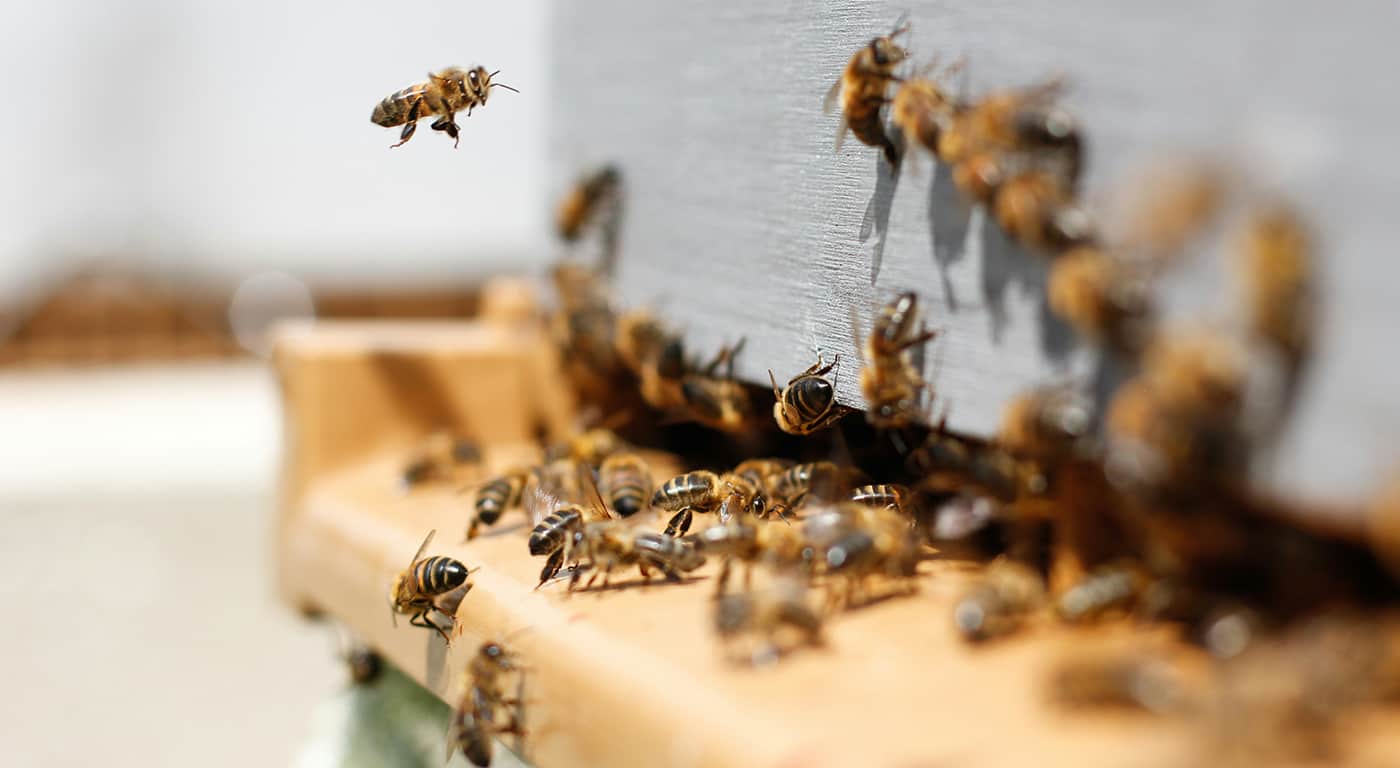

A rooftop in downtown Chicago seems like the last place you’d expect honeybees to thrive.
Traffic below.
Concrete everywhere.
Constant noise.
Almost no visible nature at street level.
Yet thousands of bees are now living successfully on rooftops, apartment buildings, community gardens, hotels, and office towers across major cities worldwide. And surprisingly, many urban bee colonies are doing better than some rural ones.
That sounds backward initially.
Most people associate healthy bee populations with quiet countryside farms and open fields, not crowded cities filled with glass buildings and traffic. But urban beekeeping has quietly become one of the more interesting environmental movements growing inside modern city life.
And honestly, the environmental impact is bigger than many people realize.
Cities Sometimes Offer Bees Better Conditions Than Farms
This surprised me while researching urban beekeeping trends.
Modern industrial agriculture often relies heavily on:
- pesticides
- monoculture crops
- chemical treatments
- habitat disruption
Those conditions can be extremely difficult for pollinators long term.
Cities, meanwhile, often contain surprisingly diverse plant life spread across:
- parks
- balconies
- rooftop gardens
- residential landscaping
- community gardens
- tree-lined streets
Urban bees frequently access a wider variety of flowering plants throughout different seasons compared to bees living near large single-crop agricultural areas.
According to United Nations Environment Programme, pollinators play a major role in maintaining biodiversity and supporting food ecosystems worldwide.
That makes healthy bee populations environmentally important far beyond honey production itself.
Pollination Helps Entire Urban Ecosystems
Bees do much more than produce honey.
They pollinate:
- flowers
- vegetables
- fruits
- trees
- wild plants
Urban pollination improves biodiversity across city environments by helping plants reproduce more effectively. That creates healthier green spaces, stronger local ecosystems, and better support for other wildlife species like birds and butterflies.
One rooftop hive can influence plant life surprisingly far beyond its immediate location because bees travel significant distances searching for nectar and pollen.
That ecological ripple effect matters.
Especially as cities continue expanding globally.
Urban Gardening and Beekeeping Often Grow Together
One pattern keeps appearing repeatedly in cities embracing sustainability initiatives: community gardening and urban beekeeping usually develop side-by-side.
Makes sense honestly.
More gardens attract pollinators.
More pollinators help gardens succeed.
That relationship strengthens local food systems in small but meaningful ways. Community gardens producing vegetables, herbs, and fruits often benefit noticeably from increased pollinator activity nearby.
I think people sometimes underestimate how psychologically important these green spaces become in dense urban environments too. Rooftop gardens and bee projects reconnect residents with ecological systems many city dwellers rarely think about daily.
That reconnection feels valuable.
Urban Beekeeping Changed Public Interest in Environmental Issues
This part fascinated me most.
Many people become more environmentally aware after interacting with local beekeeping projects because bees make ecological problems feel tangible instead of abstract.
Climate change.
Biodiversity loss.
Pesticide impact.
Habitat destruction.
These topics often feel distant until people physically see pollinators struggling or thriving inside their own communities.
Schools, hotels, restaurants, and apartment complexes increasingly host educational hive projects partly for this reason. Bees create visible environmental engagement.
And honestly, people usually protect ecosystems more actively once they feel personally connected to them.
Honey From Different Cities Actually Tastes Different
This sounds almost fake initially.
It isn’t.
Urban honey flavor changes depending on local plant life available to bees in different neighborhoods and seasons. Honey collected near lavender-heavy areas tastes different from honey influenced by citrus trees, wildflowers, rooftop herbs, or park vegetation.
Some urban beekeepers now produce hyper-local honey varieties tied to specific city districts almost like regional coffee or wine cultures.
That localization created small business opportunities too:
- artisan honey brands
- rooftop apiaries
- sustainable food markets
- eco-tourism projects
Urban agriculture became more economically creative over the last decade generally.
Not Everybody Loves Urban Beekeeping
There are legitimate concerns too.
Poorly managed hives can:
- stress local bee populations
- spread disease
- increase competition with native pollinators
- create safety concerns in crowded areas
This is where the conversation becomes more nuanced.
Some environmental researchers argue cities should focus more heavily on supporting native bee species and broader pollinator habitats rather than only increasing honeybee populations specifically.
That criticism matters because honeybees are not the only pollinators ecosystems depend on.
Butterflies, moths, beetles, hummingbirds, and native wild bees all contribute ecologically too.
Good urban sustainability planning considers the entire ecosystem rather than treating honeybees as a single environmental solution.
Climate Change Increased Interest in Pollinator Protection
Public concern about declining bee populations expanded heavily after repeated scientific reports linked pollinator decline to:
- pesticide exposure
- habitat loss
- climate disruption
- disease
- agricultural intensification
According to Food and Agriculture Organization, pollinators are essential for large portions of global food production and biodiversity maintenance.
That awareness helped urban beekeeping gain momentum culturally. People increasingly see pollinator support as part of broader environmental responsibility rather than simply a niche hobby.
Urban Beekeeping Feels Surprisingly Human
One thing I kept noticing while researching this topic: many urban beekeepers describe the activity almost therapeutically.
Watching bee colonies requires:
- patience
- observation
- consistency
- calm attention
In cities dominated by screens, traffic, noise, and nonstop digital stimulation, tending a hive creates a completely different rhythm of attention. People slow down.
That emotional aspect probably explains why urban beekeeping appeals even to people who initially had no strong interest in agriculture or environmental activism.
The process feels grounding.
What Urban Beekeeping Really Represents
At its core, urban beekeeping reflects something larger than honey production.
It reflects a growing desire to make cities feel more alive environmentally.
Modern urban life often disconnects people from ecological systems almost completely. Food appears packaged in stores. Nature becomes decorative background instead of something communities actively participate in sustaining.
Bee colonies quietly disrupt that separation.
A rooftop hive in downtown Chicago reminds people that even dense cities remain connected to larger ecosystems constantly:
- seasons
- plant cycles
- pollination
- biodiversity
- climate patterns
That connection still exists whether people notice it or not.
And honestly, cities that remember this will probably feel healthier — both environmentally and psychologically — in the long run.
